Uganda is a democratic country because it has a Constitution which is the supreme law in the country, three arms of government i.e. the Executive, Parliament and Judiciary which all execute their duties “without interference.”
Looking into the human rights of course of the people in Uganda all provided for under the Constitution with the task of ascertaining they are respected being onto the Executive arm according to Article 20(2) of the Constitution and then the Judiciary to hold the Executive or any person responsible where there is failure in respecting one’s right. This power is provided for under Article 50(1) of the Constitution. We however need to note that amongst the rights provided in the Constitution including the right to education, right to privacy, protection of the right to life, among others, none of these are provided by the State or government because all these rights are inherent. We are born with these rights and the duty of the state is to ensure that these rights are respected, upheld and promoted. It’s after there is a failure here that one can run to the courts of law for redress about their rights that have not been protected and hence violated as stated earlier.
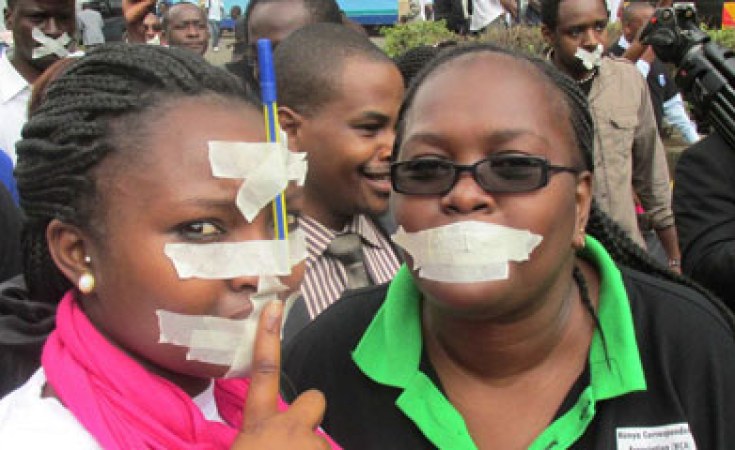
My interest here lies in the right or freedom of speech. According to the Constitution of Uganda, every Ugandan has a freedom of speech and expression and accordingly this included the freedom of press and other media. Let’s go slightly into the meaning of “other media”, what’s the Constitution trying to refer to by other media and what actually entails other media. The dictionary meaning is one of a means of communication that reaches a large number of people such as television, newspapers and radio. That maybe an older definition as most dictionaries give an explanation relating to news, however the development currently is that of social media which are basically computer programmes that enable people share information and thoughts with the use of their phones and computers. Now this is where the biggest percentage of the world’s generation is heading to and more so its through social media that most Ugandans are expression their freedom of speech and expression. As of now, Uganda contributes 3.4 million active users with an annual growth of 900,000 thousand users.
With these rising numbers, the biggest percentage is the youth who in someway feel entitled on their right to exercise the right they have and more so the freedom of speech and expression through social media mostly platforms including twitter, Facebook, WhatsApp, among others. This comes with posting anything one feels like and perhaps that’s what the freedom of speech and expression is supposed to cover. But then it goes the other way round that one receives severe and tough replies to a post they made freely; at times these replies are abusive. These same replies do not exclude your standard as a person, even the people deemed most powerful in their country or in power aren’t left aside. And then one will give you a two-way understanding, that even these persons responding are exercising their freedom of speech and expression! So, we have two person or angles from which the freedom of speech and expression is being expressed from, but obviously one will look wrong according to the perspective of the seer. Does this mean there is one violating the other’s freedom of speech and expression!? If it, was one expressing their freedom of speech and expression, does he or she have to give a reply, a comment, a post as rude as that!? Hope this doesn’t bring us to morals, but no it won’t! Does he or she have to keep his identity disclosed!? Perhaps if he is doing the right thing, then why?
There’s an answer for each of these questions here, but of course they stand in a different perspective for every individual who would give an explanation. One may say, well the person who replied is right because the information in the post was false, the other may say, well I hide my identity because this country isn’t actually a free country, I don’t know what will happen next to me. I may agree with the last person, but of course its not as constant as it is made to seem like!
You realise that the right to opinion is embedded in the freedom of speech and expression and hence a private right and absolute which is not allowed to be restricted by law or any other power; since it belongs to the realm of the mind. On the other hand, the freedom of expression is a public right hence it impermissible to attempt and close out people’s ideas. As much as it may seem that way, there is nothing like the free will to express “all” ideas you may need to whoever you may need to.
There is the “The Computer Misuse Act” and this cannot be separated from the freedom of speech and expression. Remember this right involves the use of the press or any other media inclusive of social media to express ideas, social media involves the use of computer programmes and these are what we call the social media applications to share information and ideas which means this Act is existence to also manage the use of these. Strait to our point of interest, the expression of ideas on social media and the replies they attract and receive, Section 24 of this Act provides for cyber harassment as a computer misuse offence. Accordingly, this involves making any request, suggestion or proposal which is obscene, lewd, lascivious or indecent or threatening to inflict injury or physical harm to the person or property of any person. On reading this, you actually realise this doesn’t really give a clear image of what most certainly happens on those platforms however what is most disturbing is how authorities use that very provision to issue “threats” or warnings as one may term them to social media users as they go on to use those different platforms. The other is offensive communication also a computer misuse offence provided for under Section 25 of the same Act. The language the Act uses to describe the offence is as “who wilfully and repeatedly uses electronic communication to disturb or attempts to disturb the peace, quiet or right of privacy of any person with no purpose of legitimate communication whether or not a conversation.” Are courts supposed to implore a test for one’s intention to disturb!!?
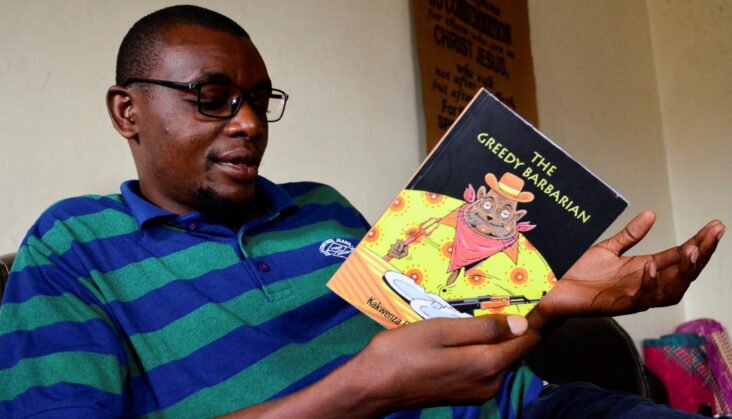
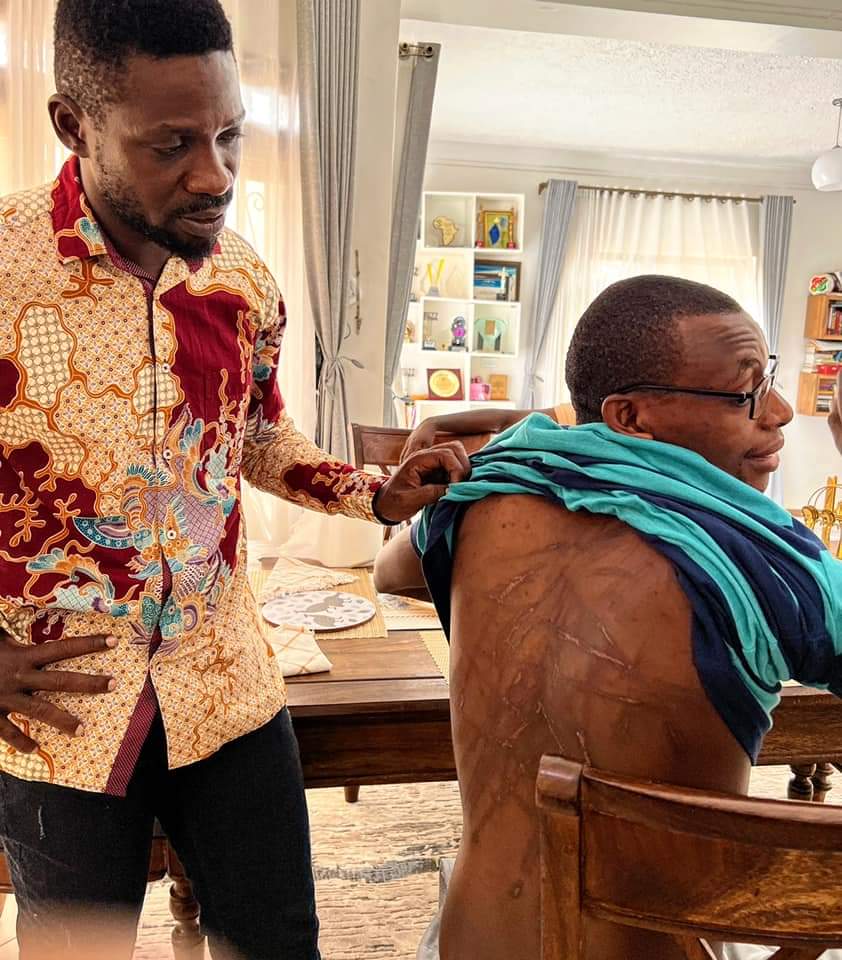
Recently, a profound writer and novelist Kakwenza Rukirabashaija was abducted from his home and later police admitted having him in their custody over offensive custody. But this draws to his tweets which are understood to have been demeaning the personality of the Commander of the Land Forces in the Uganda People’s Defence Forces Lt. Gen Muhoozi Kainerugaba who is also a son to H.E. Yoweri Kaguta Tibuhaburwa Museveni. One’ interpretation of the tweets by Kakwenza maybe that they may be falling under offensive communication but legally they may not, provided the test remains the “intention to disturb” unless the court decides to shy away from that! The form of arrest itself keeps us in doubt as of whether actually the offence here is “offensive communication” or merely a means to placing threats to members of the public who would go the same way as he had and try to attack the personality of the “first son”! Looking into the other offenders, is their arrest as rigid as this is!? I don’t think so!

Away from that, the Uganda Communications Commission (UCC) a body supposed to regulate the communications sector has guidelines in place that are supposed to be followed by telecommunication and media companies. In as much as these guidelines are in place to ensure that standards are followed by these companies, they are instead used to insurge the particular ideas and keep people from expressing their political ideas. Where the guidelines cannot prevent ideas or even block individuals then police or other security organs will! This gets back to the start to doubt the earlier statement of whether actually Uganda is a democratic nation!? One’s answer will have to be based on their understanding and perspective of what is democracy.
But in regard to what we refer to the freedom of speech and expression, a number of victims can be listed and the rest will be upon your personal judgement. In 2019, now former Presidential aspirant Joseph Kabuleeta was arrested for his reply over the President’s tweet where he had awarded high ranked soldiers medals for having attacked Kabamba Barracks in 1981, among the soldiers included now Lt. Gen Muhoozi Kainerugaba who was 7 years by then according to the record. Police referred to the reply as “acidic” and hence an offensive communication because it labelled the president as “a liar.” In February, 2021, police arrested Micheal Muhima, a law student over tweet of a picture of Enanga (the Uganda Police Spokesperson) which was captioned, “We arrested Mr. Kyagulanyi as part of our investigation into Mr. Amuriat’s missing shoes.” The tweet referred to the arrest day of Mr. Kyagulanyi Ssentamu aka “Bobi Wine who was the opposition presidential candidate who had been detained and Patrick Amuriat also a presidential candidate of the Forum for Democratic Change who had been arrested by police but released without shoes. These and many other victims have been subject to confinement in regard to such matters where the people in authority use the available laws as a shield of themselves to avoid criticism of anyway.
And now obviously we have an answer for our question, “the freedom of speech in Uganda, is it limited?” Yes and No. Provided you use such freedom to make personal expressions that do not at any opportunity include or involve the people in government and of course “the big personalities” then there is no way your freedom is curtailed. However, the mere decision by a person to use their freedom to lay a comment about the way the country is run or object on the character of the authorities then such freedom will have to be limited because in our country the law is not the same with everyone “perhaps” as a mere comment to or about someone may not be mere with another.
 THE LEGAL NOTCH